Words by Peri Roberts
What the Hatch Is Designed to Do
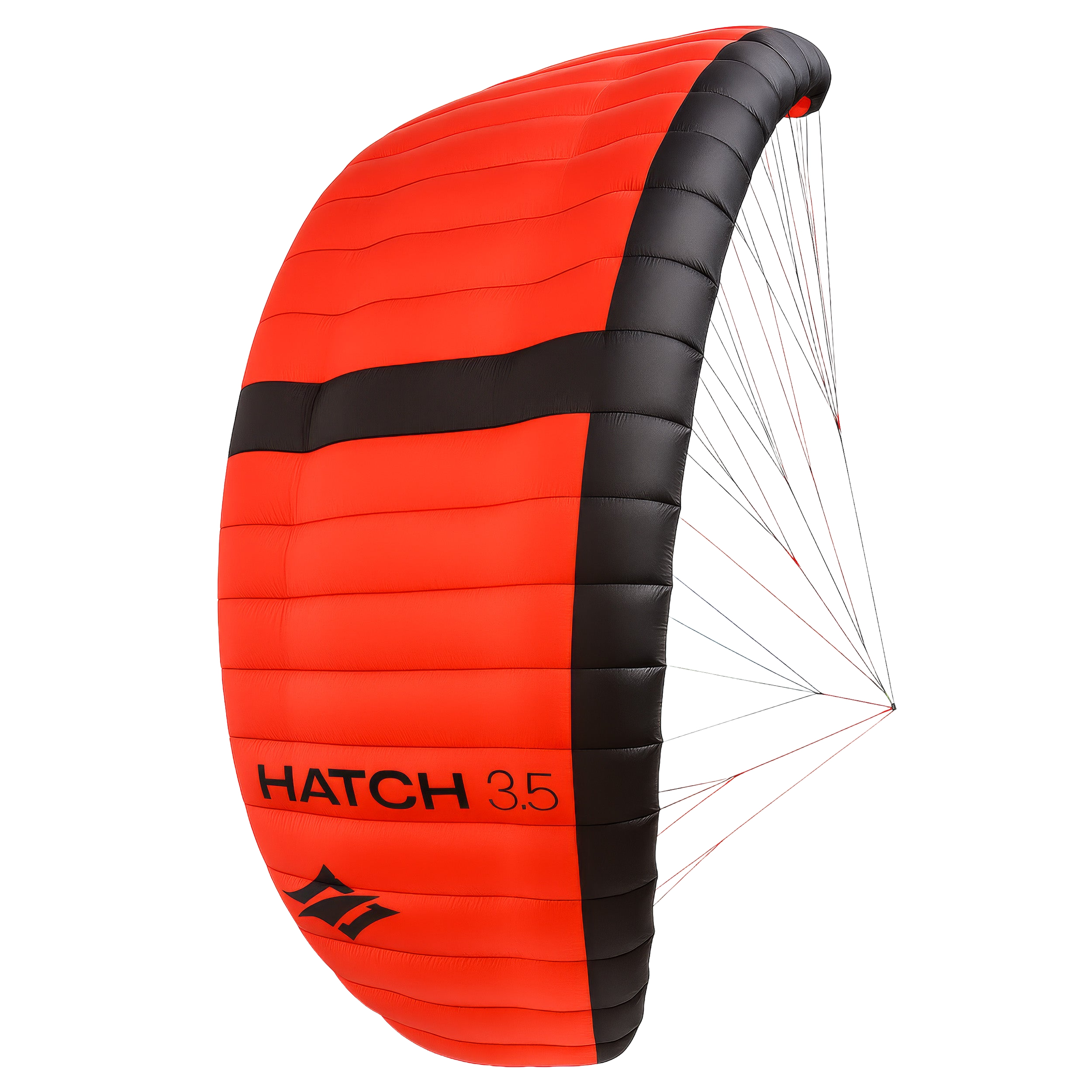
At its core, the Hatch is about usability. Not just getting up and going, but staying efficient, composed and in control once you’re on foil.
From the rider’s side, that intention is immediately noticeable. Alex describes the Hatch as “a really stable and intuitive wing to ride compared to many other wings on the market,” and that stability isn’t limited to ideal conditions. He points out that even in very light, gusty wind, “the canopy is still nice and tight and rigid – it’s not really falling out of the sky.”
That sense of predictability is central to how the Hatch feels on the water. Alex notes that when riding upwind, “even when you’re putting it down low to punch upwind, it will stay steady at the side of the window.” That steadiness translates directly into confidence, especially for riders who want to make laps rather than simply drift downwind.
From the design side, Ewan explains that this behaviour was intentional. He says the goal was to create something that “steers well, is intuitive, has good power, and a much bigger wind range than previous parawings.” The Hatch was never meant to be a niche tool – it was built to cover ground, both literally and in terms of rider progression.
Upwind Ability and Wind Range: Where It Separates Itself
One of the strongest themes in Alex’s review is how well the Hatch goes upwind. He describes it as “a blend of all the benefits you want from a parawing,” highlighting that it doesn’t sacrifice stability or packability to get there.
He even references GPS tracks from testing sessions, noting that Ewan had been posting “some pretty crazy GPS lines… even beating Johnny Heineken on upwind angles some days.” While that’s anecdotal, it reinforces what Alex felt on the water: this is a parawing designed to hold its line and keep moving forward.
Ewan backs this up with technical explanation. He demonstrates that the Hatch can be flown fully depowered on the A-lines while still maintaining shape and steering input. In his words, “I’ve completely dumped all the power out of the parawing… and it’s not collapsing. It’s holding its shape really well.”
That collapse resistance is critical when riding powered up or pushing hard upwind in gusty conditions. According to Ewan, careful refinement of the leading edge profile and wing tips was key to achieving this, ensuring the wing “will not collapse when you’re going upwind pushing hard, depowering to hold onto a strong gust.”
Steering, Line Layout, and Why Simplicity Matters
A recurring frustration in parawinging is overcomplication – too many lines, awkward grabs and messy stows. Alex doesn’t shy away from this.
“A lot of the parawings on the market tend to overcomplicate the bridling and have too many lines,” he says. In contrast, the Hatch feels deliberate and stripped back. He explains that Ewan “really optimised those line lengths so you can grab and pull and stow with one pull back of your arm,” and made sure “there’s not too many lines while keeping the canopy tight and rigid for good upwind ability.”
From a design perspective, Ewan explains how steering is achieved primarily through the back lines. By twisting the bottom of the bar and applying pressure to the brakes, the wing responds intuitively, without requiring exaggerated movements or constant adjustment.
The cross-bridle system also plays a key role here. Ewan notes that it prevents the wing from “accordioning” during pumping, which helps maintain power and efficiency when trying to get up on foil.
Packing Down and Redeploying: Real Use, Not Theory
Packability is one of the defining traits of parawinging, and Alex spends significant time explaining how the Hatch behaves when stowed.
He prefers a rear-line stow method, calling it “the most effective pack down” because it reduces the chance of tangles compared to front-line stowing. In his experience, “a front-line stow inherently tangles… you have more of the bridles hanging around.”
What surprised him most was how manageable even the largest size felt. Speaking about the 5.1m, Alex says, “this still packs down really good,” attributing that to the optimised leading edge size, which “is not too big, so it doesn’t take up as much space as some of the others on the market.”
Ewan reinforces this approach, explaining that once the bridle lines are fully contained inside the wing during a brake-line stow, “there’s no way they can get tangled anymore,” making for a much cleaner redeploy on the water.
Low End Power, Efficiency and the Foiling Mindset
Alex also addresses one of the most common critiques floating around online: that while the Hatch has excellent low-end power, it lacks top end.
He doesn’t see this as a drawback. In fact, he reframes it entirely. “If something has really good low end, then of course it’s not going to have good top end,” he explains. “Having good low end just means you can use a smaller size.”
For Alex, that aligns perfectly with modern foiling goals. “Everyone wants to be more efficient,” he says, pointing out that downsizing wings and boards leads to better manoeuvrability and less surface area dragging through the water.
In that sense, the Hatch isn’t chasing extremes – it’s tuned for efficiency, early lift and sustained riding time.
Sizes, Quivers and Rider Fit
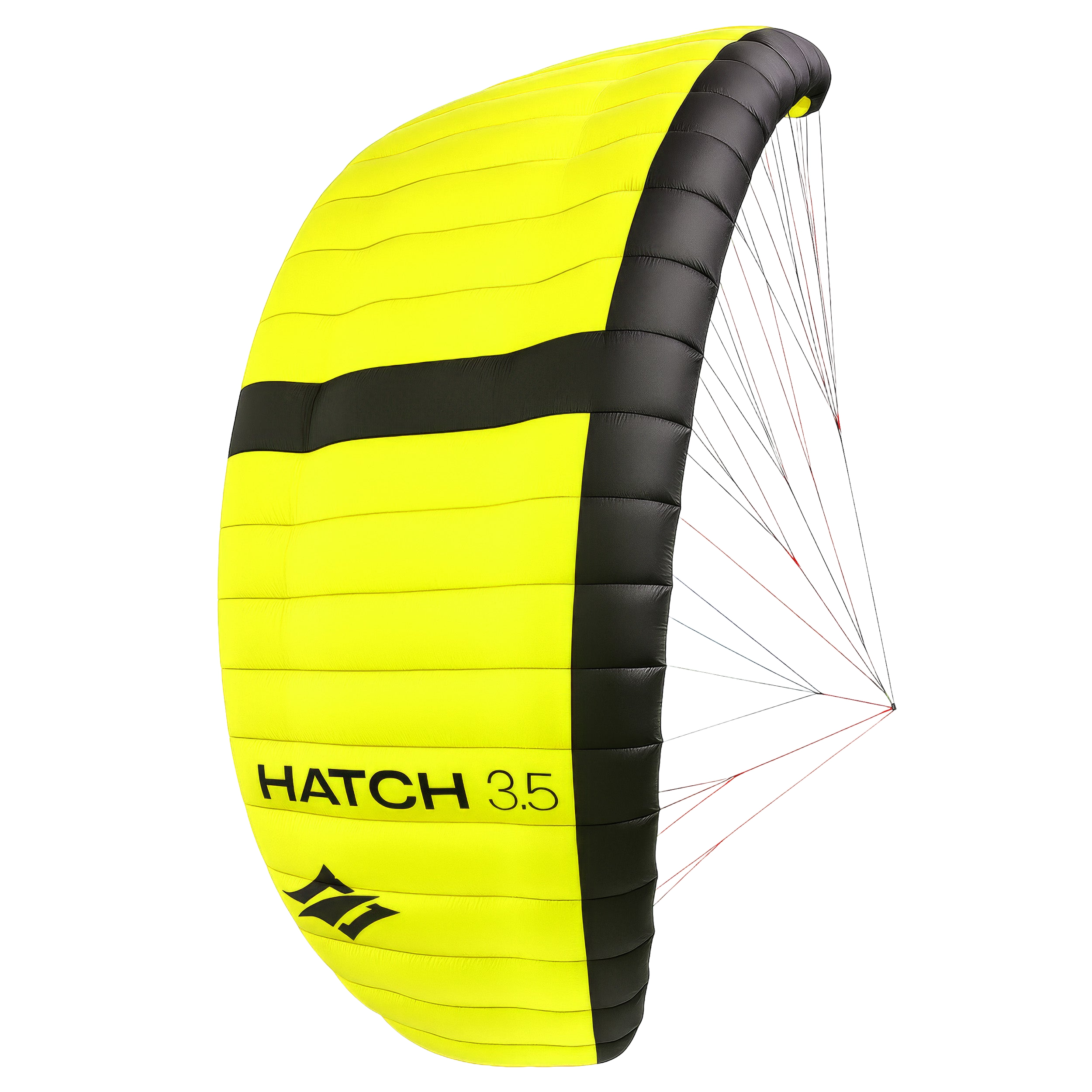
Having ridden the full range, Alex is clear about his preferences. “My favorite size is the 3.5,” he says, calling it “the perfect balance of things if you have the right wind for it.” He also highlights the usefulness of the 2.7 in strong conditions and the 4.3 and 5.1 for lighter wind sessions.
He does add important context: “If you’re a smaller person, the 5.1 will be tough to pack down and handle.” For larger riders, however, it becomes a valuable tool for getting going earlier and riding smaller boards – a trend Alex sees growing across the sport.
Ewan’s sizing philosophy mirrors this, noting that the range was built around the 3.5 as a baseline, creating what he describes as “a really great one-wing quiver” for most riders.
When the Morph Comes Into the Conversation
Only after spending time on the Hatch does Alex bring up its predecessor.
He’s clear that the Morph had its place, describing it as “one of the first design parawings on the market” that served its purpose at a time when riders “didn’t even really know what was capable of a parawing.”
But expectations have changed – and so has the design. In Alex’s words, “the Hatch is a great upgrade by Naish from the Morph,” reflecting how far both the sport and the product category have progressed.
A Review Rooted in Experience
What stands out most in Alex’s review is the consistency. Across light wind, gusts, long upwind tacks and pack-down moments, the Hatch behaves the way it’s designed to: stable, predictable and intuitive once you’re on foil.
Throughout his time on the parawing, Alex speaks to how the Hatch blends key elements – efficiency, control, packability and range – without any one of them feeling forced or over-tuned. That balance is echoed in Ewan’s design intent, where usability and clarity were treated as performance features in their own right.
In the end, this review reflects a simple truth: time on the water, decisions made in design, and how those two meet once theory gives way to feel. Which brings it back to where this blog began – clearer answers, built from experience and backed by intent.
Attribution
Rider Review: Alexander Lewis Hughes
Design Insight: Ewan Jaspan, Naish
Product: Naish Hatch Parawing
Locations Referenced: Fuerteventura, Hood River