First: What Does Aspect Ratio Actually Mean?
Aspect ratio is how long and slender the wing is from tip to tip relative to its surface area. A high-AR wing is long and skinny. A mid-AR wing is shorter and wider. That single shape decision drives almost everything about how a foil rides.
High aspect means more glide, less drag at speed, and a wider speed range. The trade-off is a longer turn radius and a wing that's less forgiving when you push it close to stall.
Mid aspect sits in the middle. You get better low-end lift, a tighter turn, and a more stable, forgiving platform, at the cost of some top-end glide.
The Siren and the Excalibur are Naish's two answers to that trade-off, both built around the new Aluα connection system that's 30% stiffer than our Legacy connection.

The Siren: A Mid-Aspect Wing Built for Stability and Pop
Best for: wind-powered disciplines (wing foil, freestyle, wind-bump surf foil), and riders looking to progress with a foil that's confident underfoot but still loves a turn.
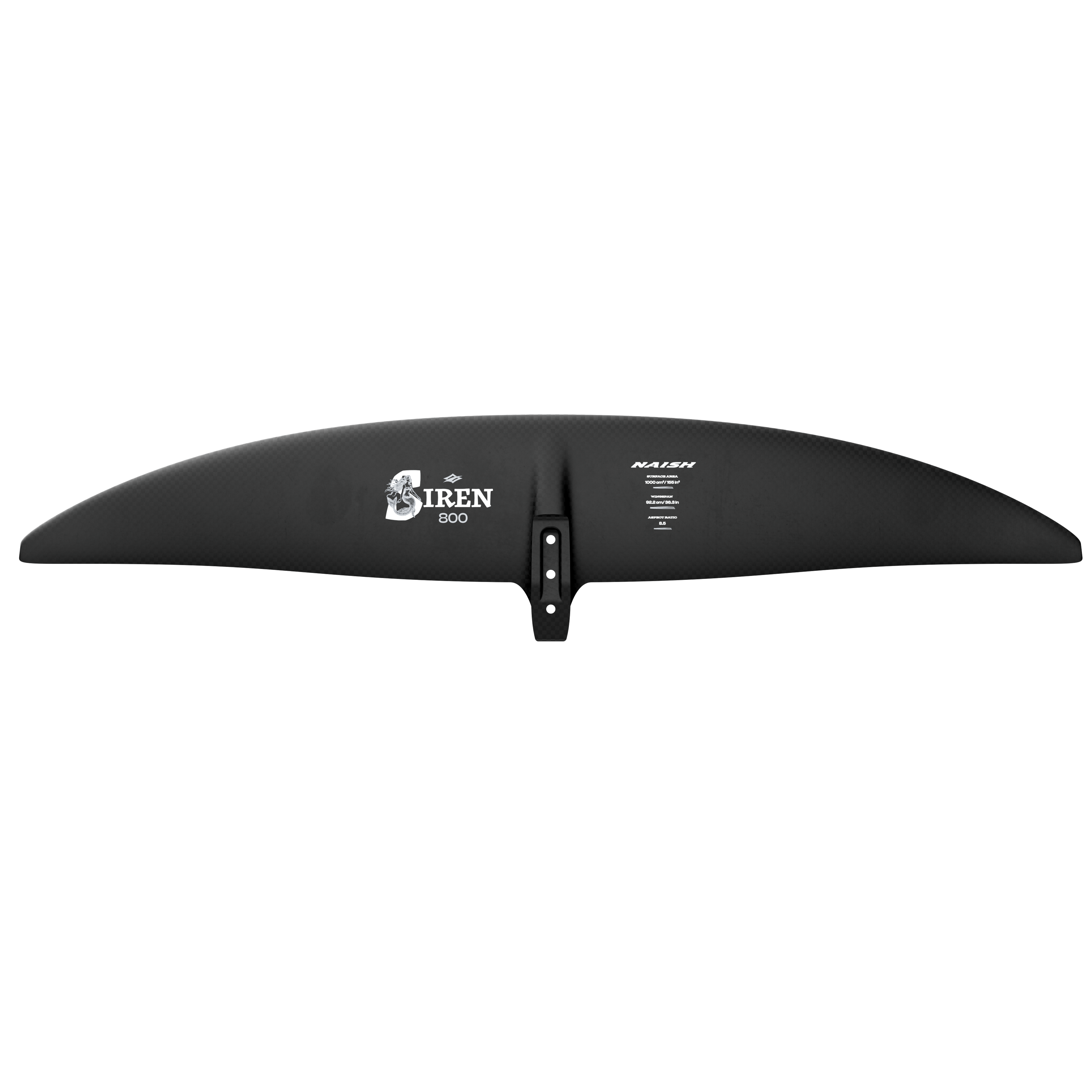
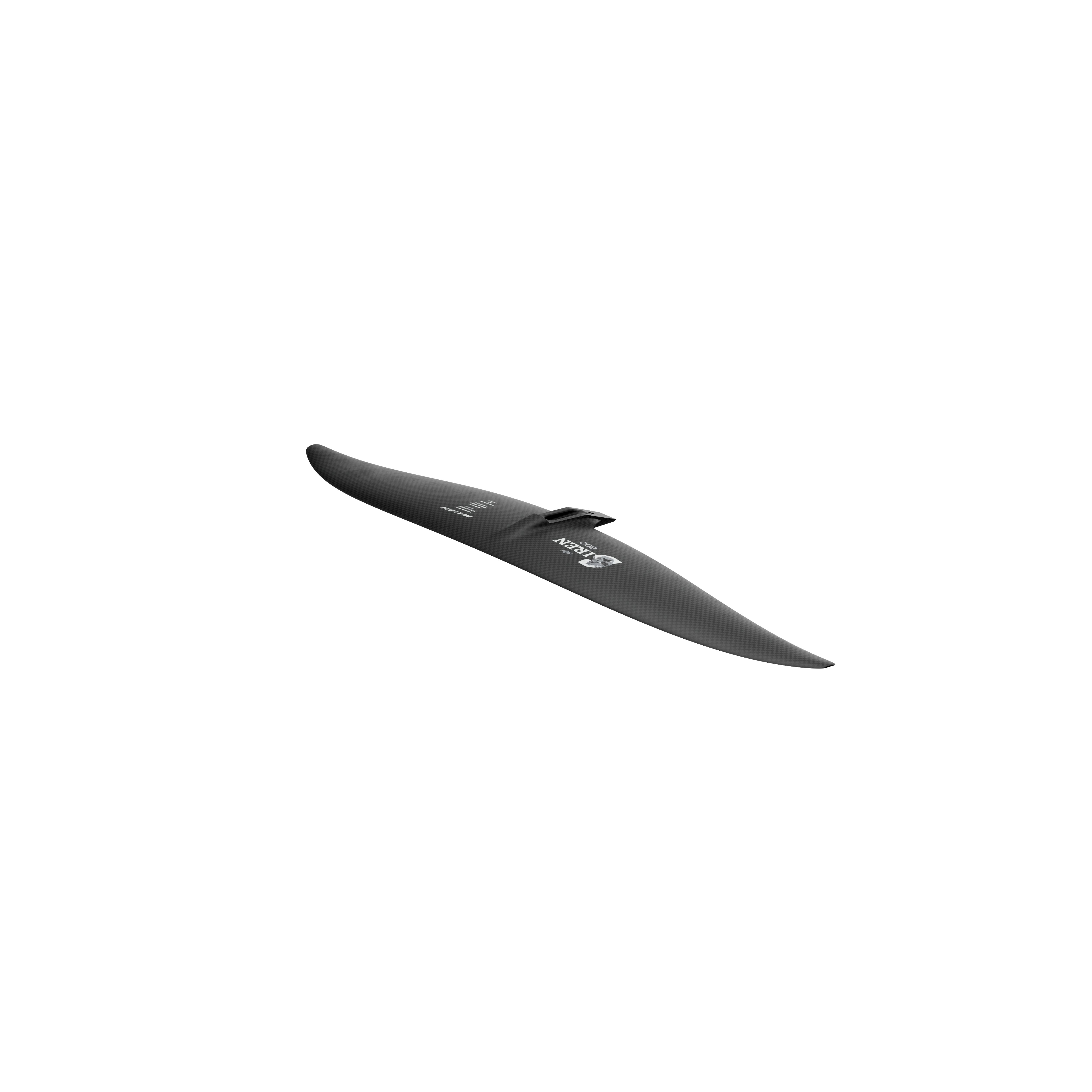
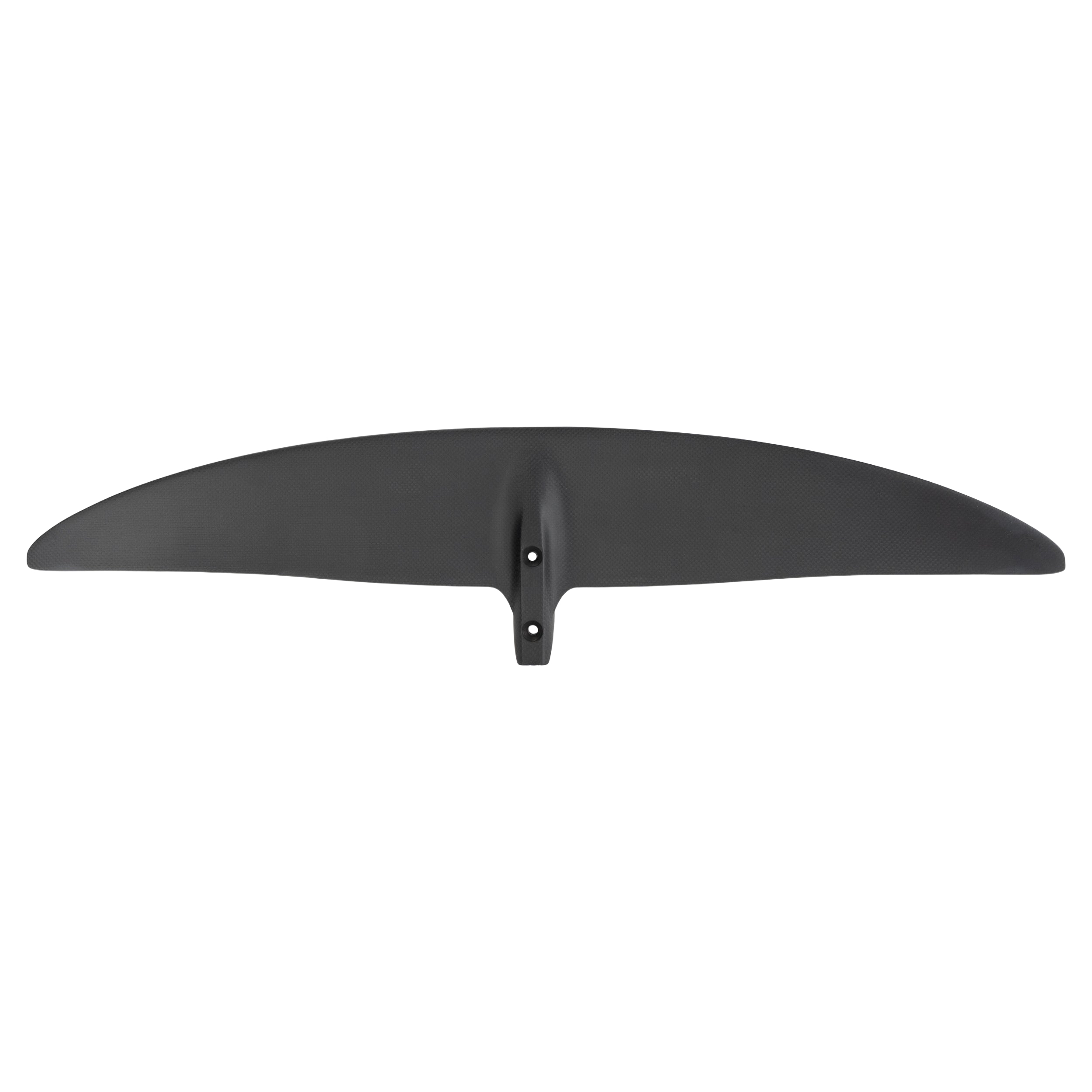
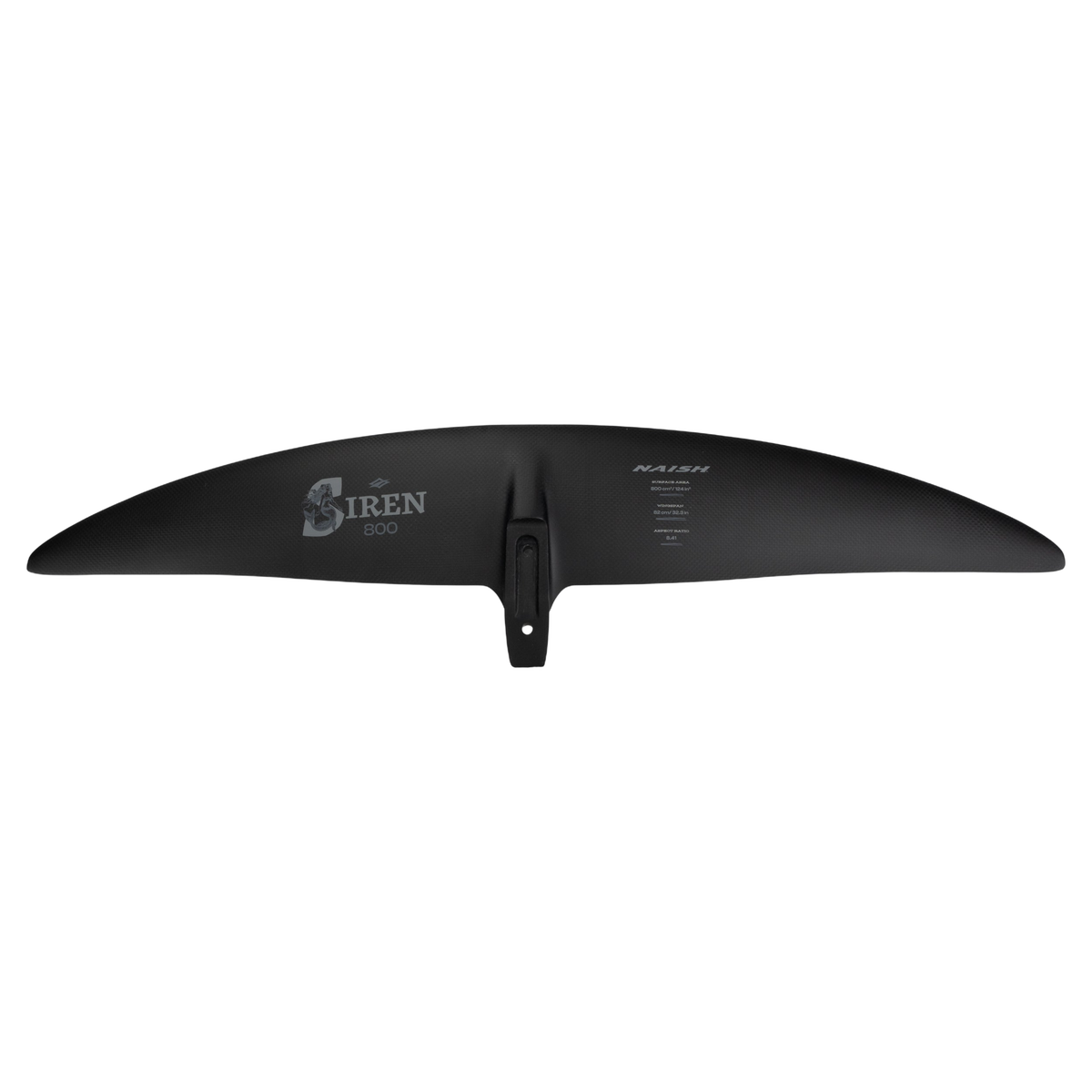
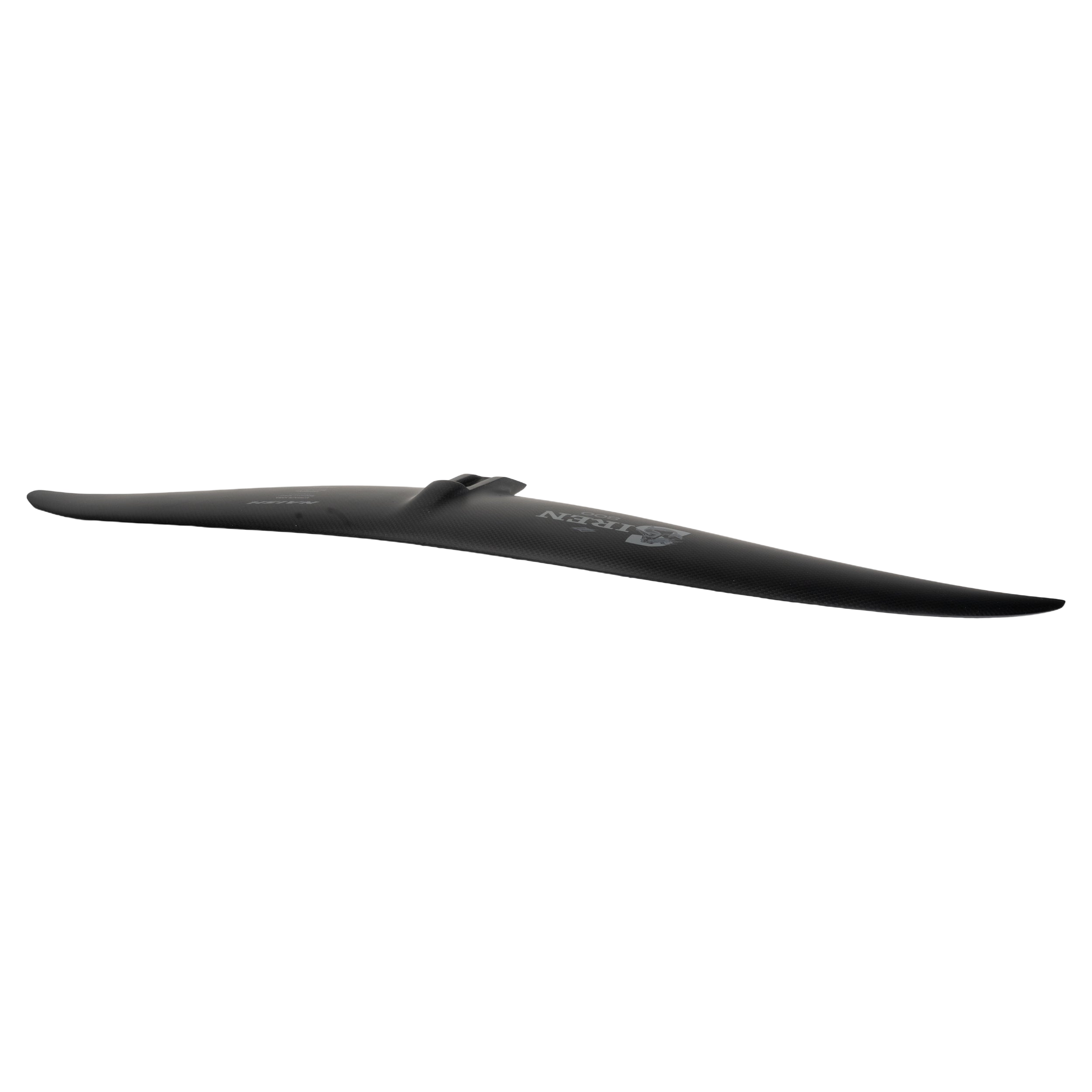
The Siren runs an aspect ratio between 8.2 and 8.5. The leading edge is strongly swept, the anhedral is consistent through the wing and softens to the tips, and the area is biased toward the center, which keeps the forces in line with the mast. Underfoot, that translates to a platform that feels stable and comfortable, even when you're pushing it.
The foil section is moderately high camber. That gives the Siren a strong low-end so you can get up on foil early, plus enough pump and glide to connect between waves and carry you through tacks and gybes.
It's tuned by size. The smaller Sirens are built for high performance, with loads of pop for freestyle and a cruising speed that keeps you in the pocket on surf foil and wind bumps. The larger sizes are more about comfort and control. Easier to push, easier to progress on, while keeping a good turn.
Naish recommends pairing the Siren with an S-Series stabilizer to lean into its surfier feel. Move to the E-Series and you trade some of that turn for more efficiency and glide.

The Excalibur: A High-Aspect Wing Built for Glide and Range
Best for: riders chasing fast foils with plenty of glide, especially for downwinding and long links on wing or surf foil, who still want a foil that can rip a turn.
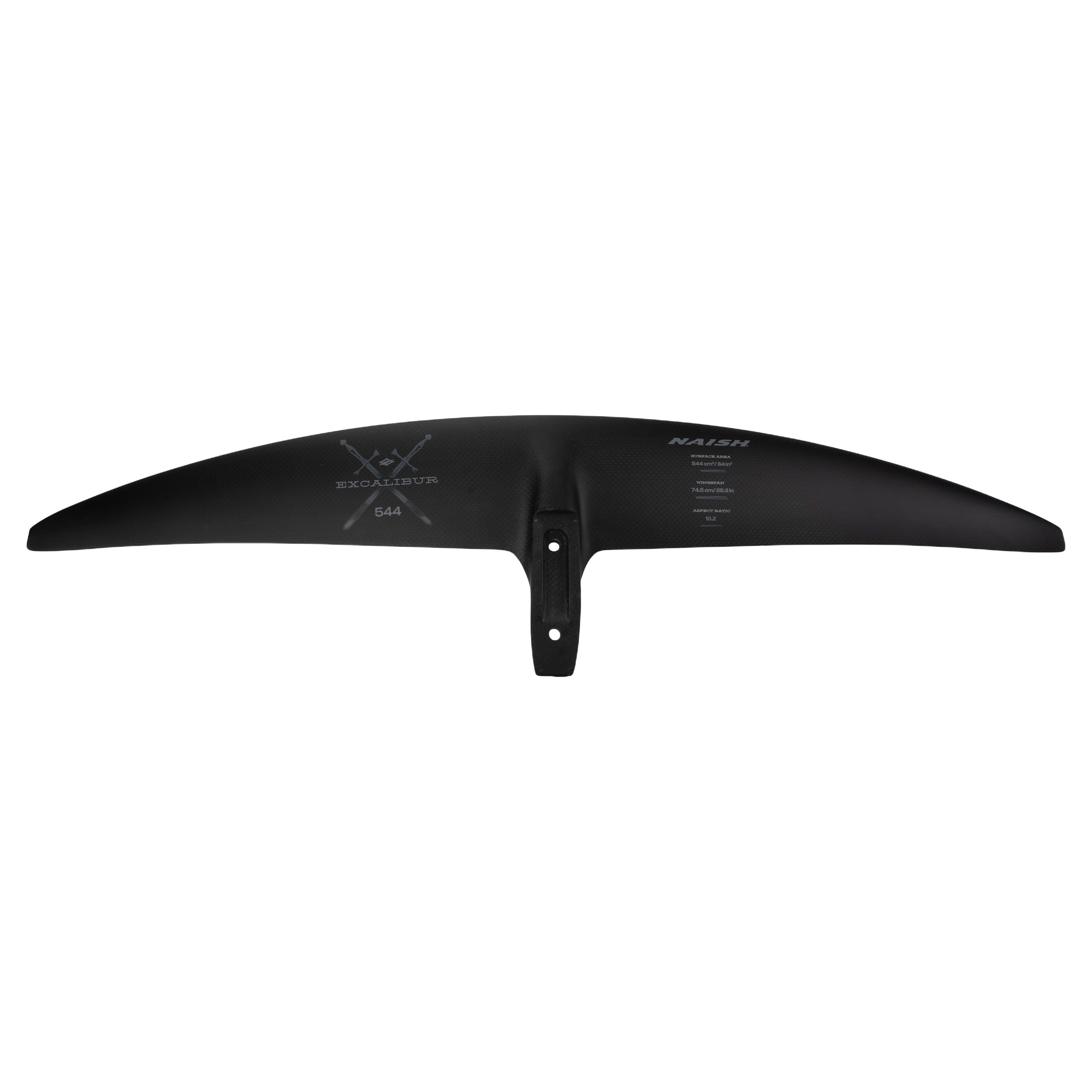
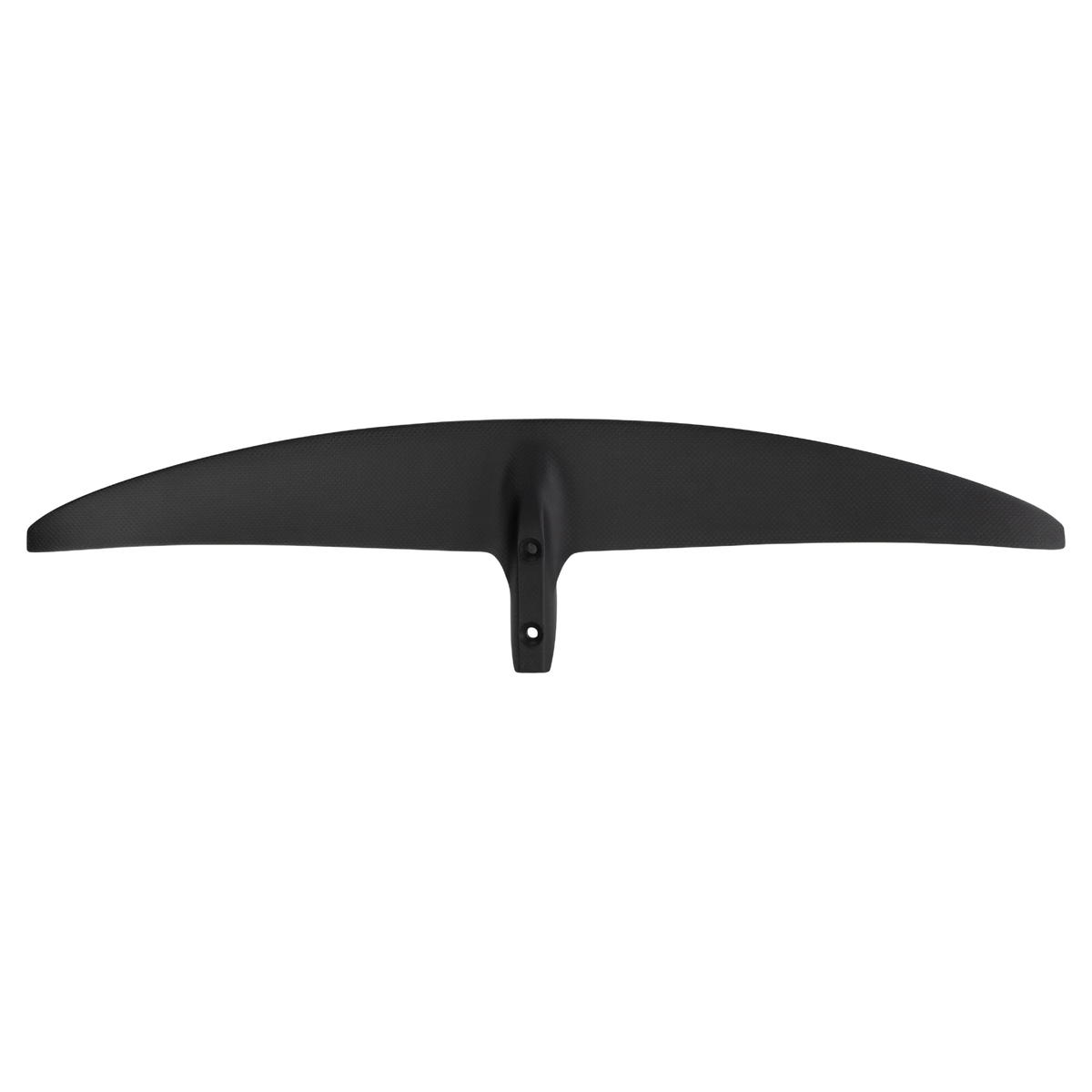
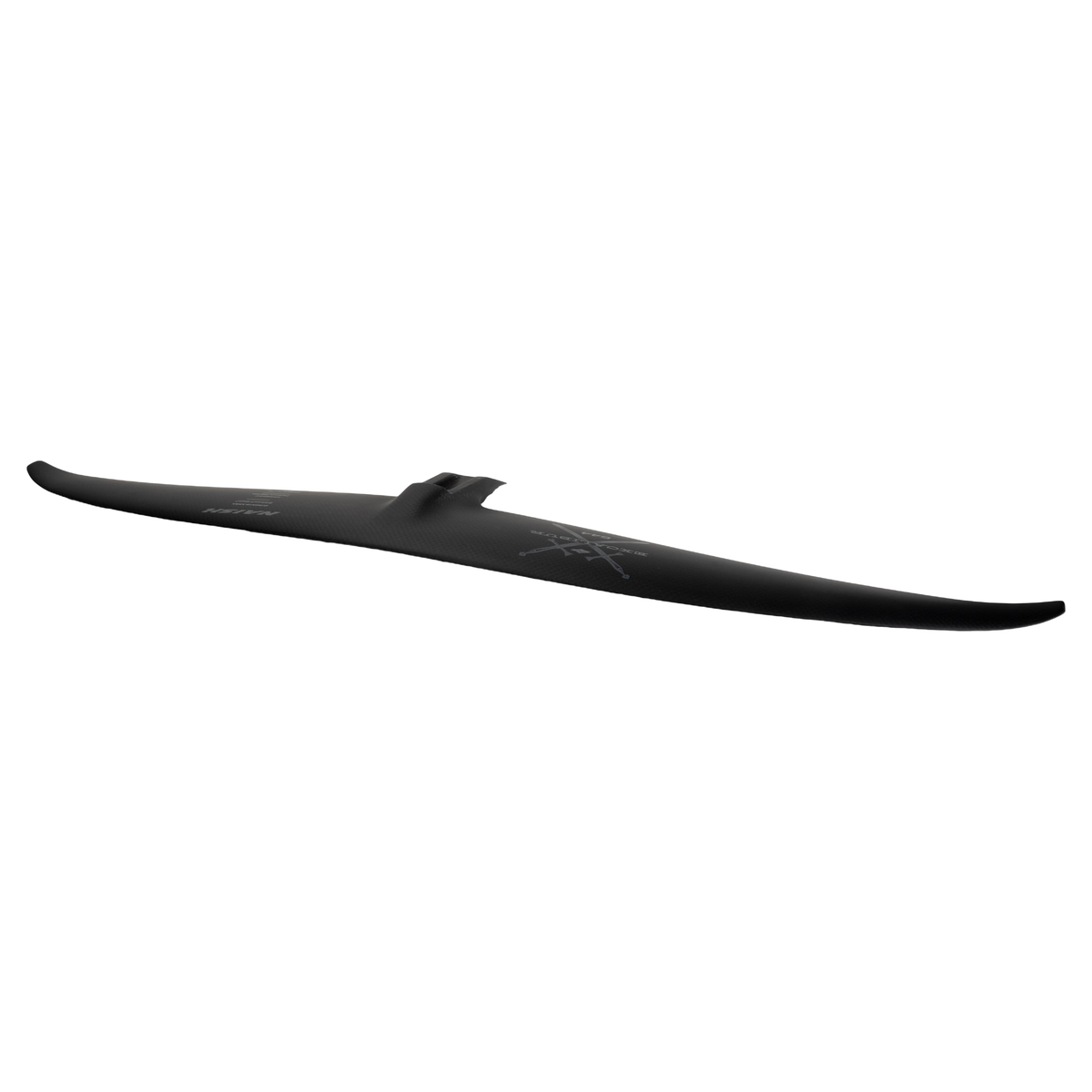
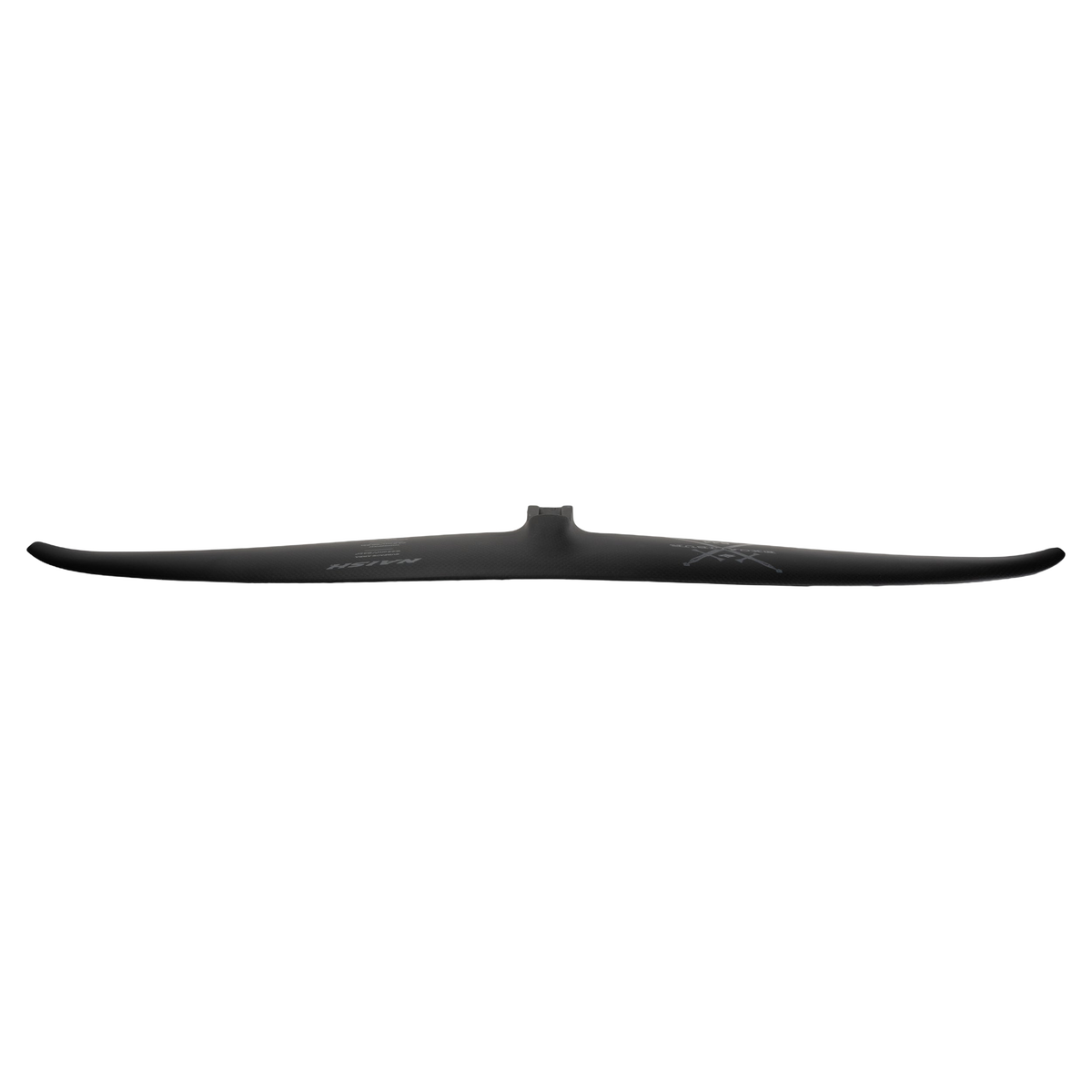
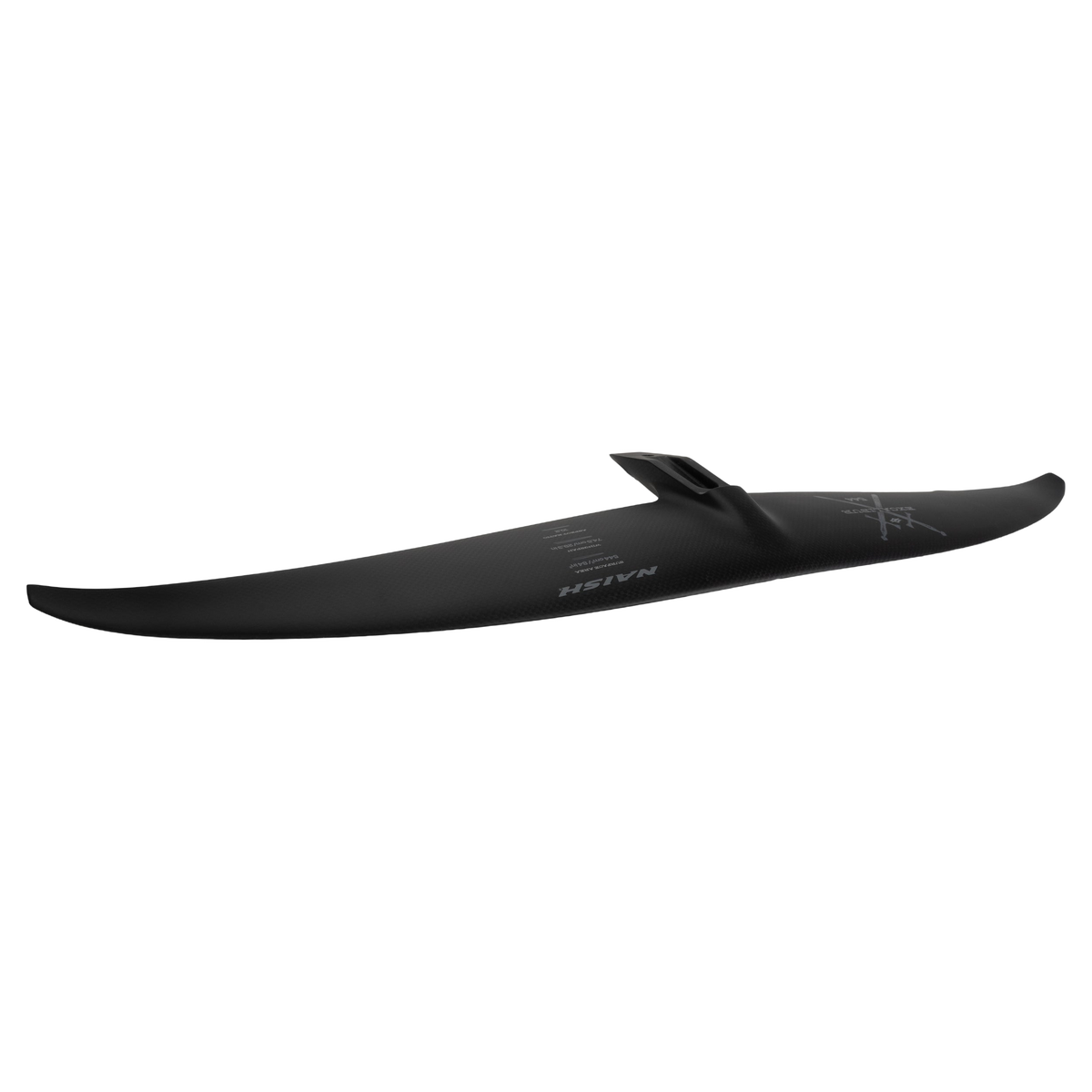
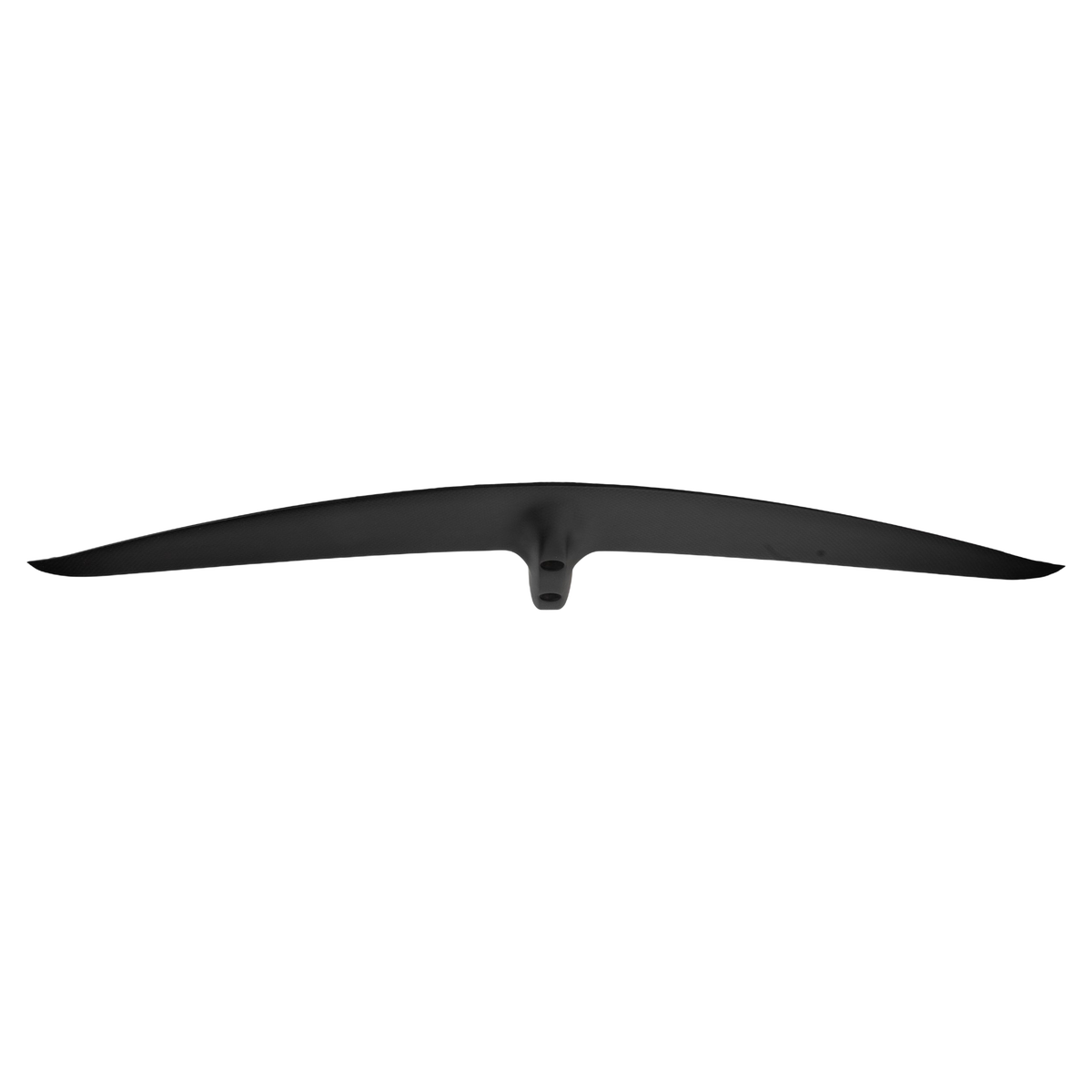
The Excalibur runs at a moderately high aspect ratio of 10.2. The outline is semi-swept, with a straighter leading edge through the center third and more sweep through the wingtip section. The foil section is high-camber, which delivers strong low-end acceleration and a wide speed range.
The wingtips have a strong dihedral sweep, steepening the angle at which the tip pierces the water. That keeps flow attached, prevents tip ventilation, and adds ease to the roll into a turn.
It's built with high-modulus carbon, so the wing is stiffer and lighter for its size. That shows up as better feedback, a lower stall speed, and a foil you can size down on without giving up performance.
We built the Excalibur to be a cross-disciplinary staple. There's enough pump and projection for downwinding, enough maneuverability for surf foiling and wave riding, and enough stability and control for wing foiling.
Pair it with an E-Series stabilizer to maximize efficiency, speed, and glide. Switch to an S-Series for a surfier, more maneuverable feel.

What They Share
Both the Siren and the Excalibur are built on the new Aluα connection system, which delivers a 30% increase in connection stiffness over the Legacy system. The Aluα has a larger cross-sectional area and a sleeker profile, so the whole platform feels more direct under your feet.
Both can be tuned with the same stabilizer family. E-Series for efficiency, speed, and glide. S-Series for a surfier, more maneuverable ride. The difference is which one Naish recommends as the default. The S-Series is the call for the Siren, and the Excalibur runs equally well with either depending on the day.
Siren or Excalibur? Choose This If…
- Choose the Siren if your sessions are mostly wind-powered, you want a stable, forgiving platform to push on, and you value pop and a tight turn over outright glide.
- Choose the Excalibur if you cross between disciplines, especially downwind, parawing and surf foil, and you want maximum glide and a wider speed range without giving up the ability to turn.
If you're on the fence: The Siren is the foil you reach for to push your wing foiling and load up freestyle. The Excalibur is the foil you reach for to cover ground, link bumps, and chase glide across multiple disciplines.
| Spec | Siren | Excalibur |
| Wing type | Mid-aspect | High-aspect |
| Aspect ratio | 8.2 – 8.5 | 10.2 |
| Outline | Strongly swept leading edge, centered area distribution | Semi-swept, straighter LE through the center third, more sweep at the tips |
| Tip geometry | Consistent anhedral, softens to the tips | Strong dihedral sweep |
| Foil section | Moderately high camber | High camber |
| Construction | Premium carbon layup | High-modulus carbon |
| Connection | Aluα (+30% stiffness vs Legacy) | Aluα (+30% stiffness vs Legacy) |
| Strengths | Stability, pop, tight turn, strong low-end | Glide, projection, wide speed range, low stall speed |
| Disciplines | Wing foil, freestyle, surf foiling | Downwind, surf foil, wing foil (cross-discipline) |
| Default stabilizer (included with semi-complete) | S-Series | E-Series |
| Alternate stabilizer | E-Series for efficiency | S-Series increased maneuverability |